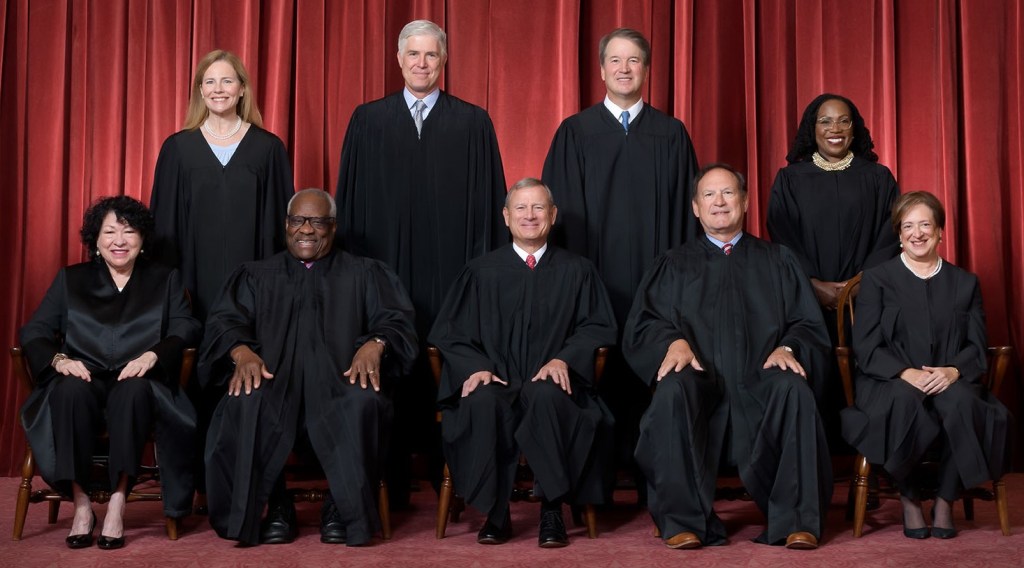
US Supreme Court Justice Kagan illustrated a key problem in our legal system. The courts and Congress are struggling to get a handle on the complex problems that arise when AI is driving what companies are doing. Yesterday, I wrote about how it’s a problem for HR leaders and Labor attorneys, when AI is involved in layoff decisions.
There’s a “black box” that makes it difficult to understand why the AI is making the choices that it makes. If the lawyer wants to challenge an employee dismissal, the HR he can’t depose the AI to find out how it made a decision.
Yesterday’s SCOTUS hearing in Gonzalez v. Google provided a good snapshot of where things stand in our legal system as lawyers, courts, and the Congress struggle to find a way forward to address concerns about harmful content on the internet.
Kagan is basically saying “we’re not qualified” to sort this out. More importantly from a legal standpoint, the law in question is very broad, very clear, and it will likely require new legislation from Congress.
The law in question is Section 230 of the Communications Decency Act of 1996. The attorney for Gonzalez is arguing that Google’s algorithm, by “choosing” what content to serve up, constitutes “speech” and therefore is not covered by the law, which protects providers from liability for content posted by others.
The key portion of Section 230 is only 26 words long and reads
“No provider or user of an interactive computer service shall be treated as the publisher or speaker of any information provided by another information content provider.”
The problem for the courts is that the statute is very clear, and making exceptions would require great effort and skill at defining an exception that doesn’t undermine Congress’ intent. Congress is better equipped to put time and resources into studying the issues at hand, bring experts into hearings, and carving out exceptions.
Congressman Ted Liu made AI history last month when he used Chat GPT to write proposed legislation:
Whereas, artificial intelligence (AI) has the potential to greatly improve the lives of Americans and people around the world, by increasing productivity, improving health care, and helping to solve some of the world’s most pressing problems;
Whereas, AI is rapidly advancing and has the potential to change the way we live, work, and interact with one another;
Whereas, Congress has a responsibility to ensure that the development and deployment of AI is done in a way that is safe, ethical, and respects the rights and privacy of all Americans;
Whereas, Congress has a responsibility to ensure that the benefits of AI are widely distributed and that the risks are minimized:
[Now,] therefore, be it Resolved, That the House of Representatives supports Congress focusing on AI in order to ensure that the development and deployment of AI is done in a way that is safe, ethical, and respects the rights and privacy of all Americans, and that the benefits of AI are widely distributed and the risks are minimized.
https://lieu.house.gov/
Lieu recommends creating a “nonpartisan A.I. Commission to provide recommendations on how to structure a federal agency to regulate A.I., what types of A.I. should be regulated and what standards should apply.” This seems like a step in the right direction. I’ll be tracking his efforts and other significant policy developments.

 Make Up Your Mind
Leave a comment